Why Tea Franchises Are Delivering 40-80% Profit Margins While Restaurants Struggle in 2026

Tea franchises are realizing profit margins of 40-80% in 2026 due to several factors. They adapt well to health trends, offering antioxidant-rich beverages that cater to health-conscious consumers. Many entrepreneurs are capitalizing on this by investing in a tea shop franchise, which allows for lower overhead costs from reduced space and staffing. Innovative marketing, including social media engagement and personalized promotions, helps attract and retain customers. Additionally, the growing demand for customizable drink options strengthens brand loyalty.

The Resilience of the Tea Franchise Model

Although the tea franchise model faces competition from various beverage options, it demonstrates remarkable resilience in the marketplace. This adaptability is fueled by innovative approaches to product offerings and customer engagement. Tea franchises are continuously evolving, introducing unique flavors, customizable drinks, and sustainable practices that appeal to a diverse clientele. The model thrives on a strong community presence, fostering loyalty through personalized experiences. Additionally, franchises often leverage technology for efficient operations and enhanced customer interactions, further solidifying their market position.

Health Trends Driving Consumer Choices

As consumers increasingly prioritize health and wellness, the demand for tea has surged considerably. While people still crave the comfort of Traditional Indian tea, they are gravitating toward varieties rich in antioxidants, vitamins, and minerals. This trend reflects a broader movement towards functional beverages that enhance well-being. Innovative flavors and blends, such as adaptogenic herbs and superfoods, further appeal to health-conscious individuals. Additionally, the rise of sustainability and ethical sourcing resonates with consumers who are mindful of their environmental impact.

Lower Overhead Costs Compared to Traditional Restaurants

The growing popularity of tea has not only influenced consumer choices but also impacted the operational landscape for tea franchises. These businesses benefit from notably lower overhead costs compared to traditional restaurants, which often face high expenses related to staffing and complex supply chains. Setting up a Hyderabad Tea Franchise typically requires less square footage, reducing rent and utility expenses, while streamlined menus minimize food waste and inventory costs. This lean operational model not only fosters profitability but also enables rapid scalability, positioning tea franchises as agile competitors.

Innovative Marketing Strategies in the Tea Sector

While traditional marketing methods remain relevant, tea franchises are increasingly adopting innovative strategies that leverage digital platforms and social media. These franchises utilize influencer partnerships, allowing them to reach diverse audiences through authentic endorsements. Furthermore, interactive campaigns, such as user-generated content contests, foster community involvement and brand loyalty. By employing augmented reality experiences, tea brands can provide immersive product interactions that captivate customers. Personalized marketing through data analytics also enables franchises to tailor promotions based on consumer preferences.

The Growing Demand for Customizable Beverage Options

With consumers increasingly prioritizing personalization, the demand for customizable beverage options in the tea franchise sector has surged. This trend reflects a broader movement toward tailored experiences, where customers seek to express individuality through their choices. Innovative tea franchises are responding by offering a diverse array of ingredients, flavor profiles, and preparation methods. This level of customization not only enhances customer satisfaction but also fosters brand loyalty, as consumers are more likely to return for unique offerings.

Frequently Asked Questions

What Are the Startup Costs for Opening a Tea Franchise?

The startup costs for opening a tea franchise vary based on location and the scale of the outlet. This investment encompasses expenses such as equipment, inventory, leasehold improvements, and initial marketing. Entrepreneurs seeking innovation should consider factors like technology integration and sustainable sourcing to enhance customer experience and align with contemporary consumer values, potentially positioning their franchise for greater success.

How Do Tea Franchises Ensure Product Quality and Consistency?

Tea franchises prioritize product quality and consistency through rigorous sourcing and standardization processes. They establish partnerships with trusted suppliers to guarantee premium tea leaves and ingredients, while implementing strict quality control measures throughout production. Staff training programs emphasize consistent preparation techniques and customer service excellence. Additionally, leveraging technology for inventory management allows franchises to adapt quickly and maintain high standards.

What Training Is Provided for New Franchise Owners?

New franchise owners receive training that covers operational procedures, product preparation, and customer service standards. This training often includes hands-on workshops and shadowing experienced staff to guarantee a deep understanding of the brand’s ethos. Additionally, ongoing support is provided in areas such as marketing strategies and inventory management. Such an emphasis on education empowers franchise owners to innovate while maintaining the consistency essential for brand success.

Are Tea Franchises Suitable for First-Time Business Owners?

Tea franchises can be highly suitable for first-time business owners, offering a manageable entry point into the beverage industry. With thorough training programs and established brand recognition, newcomers receive essential support in operations and marketing. The relatively low startup costs and flexible business models appeal to aspiring entrepreneurs. Additionally, the growing consumer interest in health and wellness products further enhances the viability of tea franchises.

How Do Seasonal Trends Affect Tea Franchise Sales?

Seasonal trends greatly impact tea franchise sales, driving fluctuations in customer preferences and beverage consumption. For instance, warmer months often see a surge in iced tea sales, while colder months might boost hot tea offerings. Innovative franchises adapt their menus and marketing strategies to align with these trends, capitalizing on seasonal flavors and limited-time promotions. By embracing these changes, tea franchises can enhance customer engagement throughout the year.


The ₹5.6 Lakh Business Model: How Tea Franchises Achieve Payback in Under 10 Months

The ₹5.6 lakh tea franchise model presents a lucrative opportunity for quick payback, typically under 10 months. This success is achieved through strategic investments in quality equipment, prime location leasing, and robust marketing efforts. Many entrepreneurs find that starting a dedicated Tea shop allows them to tap into high-volume daily sales with minimal overhead. The growing health-conscious consumer base drives demand, while innovative product offerings enhance market appeal. Operational efficiency and effective customer engagement bolster profitability, making this business model attractive. More insights on operational strategies and franchisee experiences await for those seeking a deeper understanding.

Understanding the Tea Franchise Model

Although the tea franchise model offers a promising business opportunity, understanding its fundamental components is vital for potential investors. This model thrives on a blend of quality products, strategic marketing, and efficient operations. Franchisors provide established brand recognition, enabling franchisees to leverage existing customer loyalty. The focus on innovative tea blends and diverse offerings caters to evolving consumer preferences, making these franchises appealing in a competitive landscape. Additionally, the operational framework encourages standardized processes, ensuring consistency across outlets, which enhances customer experience. With a growing trend towards health-conscious beverages, tea franchises can capitalize on this shift by emphasizing organic and specialty teas. Ultimately, a thorough grasp of these elements is key for investors seeking to initiate this lucrative venture.

Initial Investment Breakdown

Understanding the financial requirements is a key aspect of launching a tea franchise. The initial investment typically ranges around ₹5.6 lakh, encompassing several critical components. A significant portion is allocated to equipment, including brewing machines and refrigeration units, necessary for maintaining quality. Additionally, leasing a prime location incurs upfront costs, reflecting both visibility and foot traffic potential. Inventory investment covers a diverse selection of quality teas and accompaniments, catering to a broad customer base. Marketing expenses are crucial for brand awareness, often including digital initiatives and local promotions. Finally, franchise fees and training costs guarantee adherence to established operational standards. This structured investment approach fosters a sustainable business model, paving the way for rapid returns.

Key Factors Driving Demand for Tea

As consumer preferences shift towards healthier beverage options, the demand for tea has surged considerably. This trend is fueled by growing awareness of tea’s health benefits, including antioxidants and reduced caffeine levels. To meet this demand, successful outlets curate a menu featuring the best tea varieties, ranging from traditional milk teas to exotic herbal infusions. The rise of wellness culture has positioned tea as a versatile drink, appealing to various demographics seeking holistic alternatives. The innovation in flavors and blends further captivates health-conscious consumers. Furthermore, the convenience of tea-based beverages, coupled with the increasing popularity of artisanal and specialty teas, has expanded the market. Social media platforms also play a pivotal role, promoting tea culture and fostering a community that values quality and sustainability.

Choosing the Right Franchise Partner

How can a prospective franchisee guarantee they select the right partner in the tea industry? First, they should conduct thorough research on potential franchises, examining their brand reputation, operational support, and training programs. A franchise with a proven track record and innovative strategies can offer a competitive edge. Additionally, prospective franchisees should evaluate the franchisor’s financial stability and growth trajectory, confirming alignment with personal business goals. Engaging with current franchisees can provide invaluable insights into the franchisor’s commitment to success and adaptability in a dynamic market. Finally, evaluating the franchisor’s marketing strategies and product offerings will help confirm they resonate with consumer trends, ultimately fostering a thriving business relationship. These steps are essential for making an informed decision.

Location: The Heart of Your Business

Choosing the right location is essential for the success of any tea franchise, as it directly impacts customer footfall and brand visibility. A strategic site, such as a bustling marketplace or a busy office area, can create a natural influx of potential consumers, enhancing daily sales. Innovative entrepreneurs recognize that demographic analysis is vital; understanding local preferences and foot traffic patterns allows for informed decisions. For those aiming for a more premium experience, launching a Tea Cafe Franchise in an upscale neighborhood or corporate park can attract a higher-spending clientele. Flexibility in leasing options and adaptability to unique environments can also foster a competitive edge. Ultimately, a carefully selected location serves not just as a physical presence, but as an integral aspect of the franchise’s identity and growth trajectory.

Marketing Strategies for Immediate Visibility

A well-selected location sets the stage for effective marketing strategies aimed at achieving immediate visibility. To capture attention swiftly, tea franchises often employ a multi-channel approach that integrates both digital and traditional platforms. Engaging social media campaigns can create buzz, while eye-catching signage and local events foster community involvement. Collaborations with influencers and local businesses amplify reach, driving foot traffic. Innovative promotions, such as loyalty programs or limited-time offers, encourage trial and repeat visits. Additionally, utilizing targeted advertisements on platforms like Google and Facebook guarantees the franchise reaches potential customers in real-time. By intertwining modern marketing techniques with grassroots efforts, tea franchises can establish a strong presence, making them recognizable and appealing to a diverse audience within the community.

Operational Efficiency: Streamlining Your Business

Operational efficiency serves as the backbone of a successful tea franchise, enabling businesses to maximize productivity while minimizing costs. By implementing streamlined processes and leveraging technology, franchises can optimize inventory management, reduce waste, and enhance labor productivity. Automation tools for order processing and inventory tracking allow for real-time updates, ensuring that resources are allocated effectively. Additionally, adopting a centralized training program for staff promotes consistency in service quality, fostering a seamless customer experience. Franchises can benefit from data analytics to identify trends and areas for improvement, leading to informed decision-making. Ultimately, these innovations in operational efficiency not only drive profitability but also position tea franchises to adapt swiftly to market changes and consumer preferences, ensuring long-term success.

Customer Engagement and Retention Techniques

Enhancing operational efficiency sets the stage for effective customer engagement and retention strategies in the tea franchise sector. Innovative tea franchises leverage technology to foster personalized experiences, utilizing customer data to tailor offerings and promotions. Engaging customers through loyalty programs incentivizes repeat visits while creating a sense of community. Social media platforms serve as dynamic channels for interaction, allowing franchises to share engaging content and receive real-time feedback. Additionally, hosting events or workshops can deepen customer relationships, transforming casual drinkers into brand advocates. By implementing seamless ordering systems and responsive customer support, franchises can enhance satisfaction, ensuring that each interaction reinforces customer loyalty. Ultimately, these strategies not only retain clientele but also stimulate word-of-mouth marketing, essential for sustainable growth.

Analyzing Profit Margins and Revenue Streams

Profit margins and revenue streams are critical components that determine the financial health of tea franchises. To optimize profitability, these businesses typically focus on diverse offerings, including specialty teas, innovative beverages, and food pairings that enhance customer experience. High-quality ingredients and efficient supply chain management further contribute to cost control, allowing for competitive pricing while maintaining margins.

Additionally, tea franchises often leverage technology to streamline operations and enhance customer engagement, resulting in increased sales. Seasonal promotions and loyalty programs create new revenue streams while fostering repeat business. By continuously analyzing market trends and consumer preferences, tea franchises can adapt their strategies, ensuring sustained profitability in a dynamic marketplace. This innovative approach positions them for ongoing success and market relevance.

Real-Life Success Stories in the Tea Industry

The success of tea franchises can be illustrated through various real-life examples that highlight innovative strategies and unique offerings. For instance, a franchise in Bangalore has differentiated itself by introducing artisanal tea blends combined with local flavors, attracting a diverse clientele. Another notable success story comes from a franchise in Mumbai that leveraged social media to create a buzz around its eco-friendly practices, effectively engaging a younger audience. Additionally, a franchise in Delhi adopted a subscription model, allowing customers to receive premium teas monthly, ensuring consistent revenue. These examples demonstrate how adaptability and creativity in product offerings not only capture market attention but also foster customer loyalty, ultimately driving profitability within the competitive tea industry.

Frequently Asked Questions

What Are the Common Challenges Faced by Tea Franchise Owners?

Tea franchise owners frequently confront several challenges that can hinder their success. These include managing operational costs, sourcing quality ingredients, and steering through market competition. Additionally, maintaining consistent customer engagement and adapting to evolving consumer preferences pose significant hurdles. Franchisees may also struggle with staff training and retention, which are vital for delivering quality service. Effective marketing strategies are essential to attract and retain customers in a saturated market, further complicating their operational landscape.

How Can One Finance the Initial Investment for a Tea Franchise?

To finance the initial investment for a tea franchise, prospective owners can explore various innovative avenues. They might consider crowdfunding platforms to attract small investments from a wider audience, or seek microloans tailored for small businesses. Additionally, forming partnerships with local investors can provide both capital and mentorship. Utilizing personal savings or family support remains a traditional option, while leveraging government grants for small businesses can reduce financial burdens considerably.

Are There Specific Certifications Required to Operate a Tea Franchise?

Operating a tea franchise typically requires specific certifications to guarantee compliance with food safety and health regulations. These may include local health department permits, food handling certifications, and sometimes, business licenses. Additionally, some franchises may require training certifications provided by the franchisor, focusing on operational standards and customer service excellence. By obtaining these certifications, franchisees can enhance their business credibility and align with industry best practices, fostering innovation and customer satisfaction.

What Role Does Technology Play in Tea Franchise Operations?

Technology plays a pivotal role in enhancing tea franchise operations by streamlining processes and improving customer engagement. Point-of-sale systems facilitate efficient transactions, while inventory management software guarantees ideal stock levels. Social media platforms provide avenues for targeted marketing, fostering community connections. Additionally, mobile apps enable seamless ordering and delivery services, catering to modern consumer preferences. Embracing these technological advancements positions tea franchises for growth in a competitive marketplace, ultimately driving profitability and customer satisfaction.

Can Tea Franchises Expand Their Product Offerings Beyond Beverages?

Tea franchises can indeed expand their product offerings beyond beverages, tapping into the growing demand for complementary items. This innovation might include snacks, desserts, or health-conscious food options that align with the tea-drinking experience. By diversifying their menus, franchises can attract a broader customer base and enhance profitability. Additionally, incorporating local flavors or seasonal products can create unique selling propositions, fostering customer loyalty and increasing overall brand engagement.




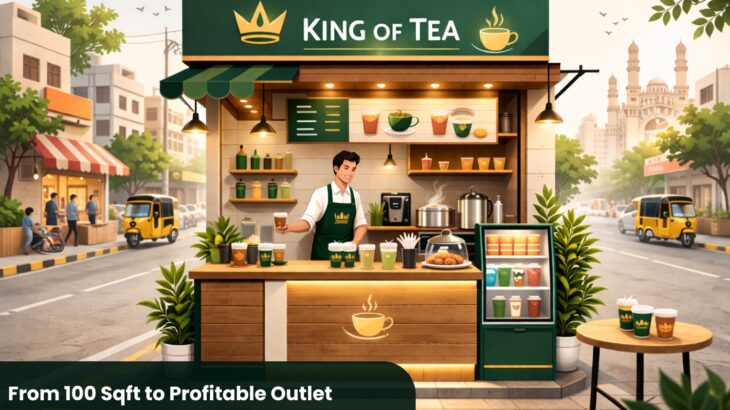
From 100 Sqft to Profitable Outlet: The Low-Risk Tea Franchise Revolution in Hyderabad

The low-risk tea franchise revolution in Hyderabad has enabled entrepreneurs to turn compact 100 sqft spaces into thriving tea outlets. Innovative young business owners blend local spices with international teas, creating unique flavour profiles. Many of these successful ventures begin by partnering with an established tea shop franchise to minimize financial risks while benefiting from recognized branding. With the right ambiance and technology integration, these outlets foster community connections while maintaining exceptional quality. Explore the success stories and steps to initiate this profitable journey further.

The Rise of Tea Culture in Hyderabad

As the sun rises over Hyderabad, the city’s burgeoning tea culture becomes increasingly evident. Innovative tea outlets are emerging, transforming traditional beverage consumption into a vibrant social experience. Young entrepreneurs are experimenting with diverse flavors, blending local spices with international teas, appealing to a discerning clientele enthusiastic for novelty. The infusion of technology into the tea experience enhances customer engagement, with mobile apps offering personalized recommendations and quick delivery services. These dynamic establishments serve not only as refreshment stops but as cultural hubs, fostering community connections. The rise of tea culture signifies a shift towards modernity, where the age-old beverage meets contemporary lifestyle demands, inviting a new generation to explore and savor the rich tapestry of flavors that tea offers.

Benefits of Low-Risk Tea Franchises

The burgeoning tea culture in Hyderabad has paved the way for an increase in low-risk franchise opportunities within the industry. These franchises offer aspiring entrepreneurs a unique entry point with minimized financial exposure. With manageable investment requirements and streamlined operational models, individuals can tap into a thriving market without the burdens of traditional business risks. For those looking for a versatile setup that fits into modern cityscapes, opting for an urban tea franchise provides a scalable model designed for high-traffic areas. The support from franchisors, including training and ongoing assistance, enhances the likelihood of success. This dynamic landscape not only fosters innovation but also cultivates a community of tea enthusiasts enthusiastic to explore diverse offerings, making it an attractive venture for investors and consumers alike.

Key Features of a Successful Tea Outlet

To thrive in the competitive tea market, a successful tea outlet must prioritize several key features that resonate with customers. First, a diverse and innovative menu is vital; offering unique flavors and specialty beverages can enhance customer experience and drive repeat visits. Next, a visually appealing and comfortable ambiance fosters a welcoming environment. Entrepreneurs often elevate this experience by launching a premium Tea Cafe Franchise, which combines aesthetic appeal with a sophisticated menu. Additionally, leveraging technology, such as mobile ordering and loyalty programs, can streamline operations and enhance customer engagement. Quality sourcing of ingredients guarantees exceptional taste, while strong branding and effective marketing strategies help establish a loyal customer base. Finally, exceptional customer service is essential, as attentive staff can create memorable interactions that foster long-term relationships with customers.

Steps to Start Your Own Tea Franchise

Starting a tea franchise can be a rewarding venture for aspiring entrepreneurs looking to tap into the growing beverage market. The initial step involves conducting thorough market research to identify potential locations and customer preferences. Next, selecting a reputable brand with a proven business model is vital for ensuring support and training. Following this, entrepreneurs should secure financing, whether through personal savings or loans, to cover startup costs. Establishing a unique value proposition will differentiate the franchise in a competitive landscape. Once the location is acquired, it’s essential to focus on creating an inviting atmosphere and sourcing high-quality tea ingredients. Finally, developing a robust marketing strategy will effectively attract customers and build brand loyalty, ensuring long-term success.

Success Stories From Hyderabad’s Tea Entrepreneurs

Although the tea franchise industry in Hyderabad is relatively new, numerous entrepreneurs have already emerged as shining examples of success. Some have transformed their passion for tea into thriving businesses, leveraging unique blends and local flavors. Their approach combines traditional recipes with modern marketing strategies, creating a compelling brand identity.

Another notable figure, Arjun, has maximized a minimal space, turning a 100 sq ft outlet into a bustling hub for tea enthusiasts. His focus on sustainability and premium sourcing has attracted a loyal customer base. These stories exemplify how creativity, adaptability, and a commitment to quality can foster unprecedented growth in Hyderabad’s dynamic tea market, inspiring future entrepreneurs to initiate their own journeys.

Frequently Asked Questions

What Are the Initial Investment Costs for a Tea Franchise?

Initial investment costs for a tea franchise can vary considerably based on location, brand reputation, and scale of operations. Typically, entrepreneurs may expect to invest between 1.6 lakhs to 5.6 lakhs. This includes expenses for equipment, branding, and initial inventory. Additionally, potential franchisees should consider ongoing royalty fees and marketing contributions. Innovative franchise models often emphasize low overhead costs, enabling a broader range of investors to engage in the burgeoning tea market.

How Long Does It Take to Break Even in This Business?

The time it takes to break even in a tea franchise can vary considerably based on factors such as location, operational efficiency, and customer traffic. Generally, a well-managed franchise can expect to reach its break-even point within 6 to 18 months. Innovative marketing strategies and a focus on quality service can expedite this process, allowing entrepreneurs to capitalize on emerging trends and consumer preferences more swiftly, ultimately enhancing profitability in a competitive market.

Are There Specific Licenses Required to Operate a Tea Franchise?

Operating a tea franchise necessitates several specific licenses. Primarily, a food safety license is essential to guarantee compliance with health regulations. Additionally, a business registration certificate, trade license, and GST registration may be required, depending on local laws. It is also prudent to check for any local permits related to food and beverage sales. Understanding these requirements can facilitate a smoother entry into the innovative and growing tea market.

What Marketing Strategies Work Best for Tea Outlets?

Effective marketing strategies for tea outlets often include leveraging social media platforms to engage with a younger audience, utilizing visually appealing content to showcase products. Collaborating with local influencers can enhance brand visibility. Additionally, offering loyalty programs and seasonal promotions attracts repeat customers. Community events, such as tea tastings or workshops, foster connection and brand loyalty. Incorporating sustainable practices in marketing can also appeal to environmentally conscious consumers, setting the outlet apart in a competitive market.

Can I Operate a Tea Franchise Part-Time?

Operating a tea franchise part-time is feasible, especially for those seeking innovative business models. Many franchises offer flexible hours and manageable operational demands, allowing owners to balance other commitments. However, success often hinges on effective time management and a strong support system. By leveraging technology and streamlined processes, part-time operators can maintain quality service and customer engagement, ultimately creating a vibrant outlet that thrives even with limited personal involvement.